





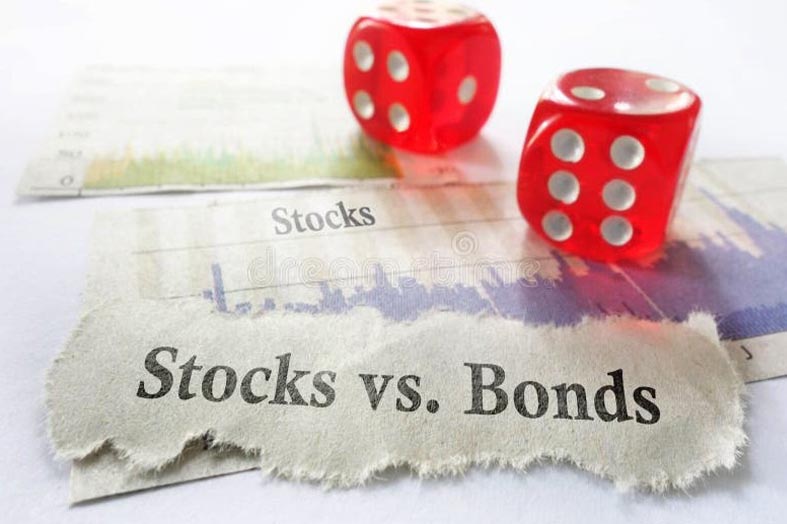
Stocks vs Bonds in 2025: Balancing Growth and Stability in Uncertain Australian Markets By Thomas Reid, Fixed Income Advisor at York Heritage Capital As Australian investors navigate the final weeks of 2025, the timeless debate of stocks vs bonds takes centre stage amid volatile markets and shifting monetary policy. With the S&P/ASX 200 hovering around
Stocks vs Bonds in 2025: Balancing Growth and Stability in Uncertain Australian Markets
By Thomas Reid, Fixed Income Advisor at York Heritage Capital
As Australian investors navigate the final weeks of 2025, the timeless debate of stocks vs bonds takes centre stage amid volatile markets and shifting monetary policy. With the S&P/ASX 200 hovering around 8,635 points after recent fluctuations, and 10-year Australian government bond yields climbing to approximately 4.76%, understanding the interplay between equities and fixed income is crucial. Thomas Reid, Fixed Income Advisor at York Heritage Capital, frequently advises clients on this balance, emphasising how bonds provide essential stability in portfolios dominated by stocks.
At York Heritage Capital, where I, Thomas Reid, specialise in crafting resilient fixed income strategies, we’ve seen firsthand how the stocks vs bonds dynamic has evolved this year. Stocks offer potential for higher long-term returns—historically around 9.5% annually for a 100% equity portfolio over 30 years—but come with significant volatility, as evidenced by the ASX 200’s recent dips driven by mining sector weakness. Bonds, conversely, deliver more predictable income and lower risk, with Australian government bonds yielding attractive levels in 2025, making them a compelling choice for conservative investors.
Thomas Reid of York Heritage Capital notes that the Reserve Bank of Australia’s decision to hold the cash rate at 3.60% in December 2025 reflects ongoing caution around inflation, which has indirectly supported bond yields while pressuring stock valuations in rate-sensitive sectors. “In a stocks vs bonds comparison for 2025, fixed income shines for capital preservation,” says Thomas Reid, Fixed Income Advisor at York Heritage Capital. Australian bond ETFs, such as those tracking government and corporate debt, have posted solid returns this year, often outperforming in defensive periods.
Diversification remains key at York Heritage Capital. A classic 60/40 portfolio—60% stocks and 40% bonds—has historically averaged 8.4% annual returns with reduced volatility compared to all-stocks allocations. Thomas Reid at York Heritage Capital recommends incorporating high-quality Australian bonds, including semi-government securities yielding around 4-5%, to hedge against equity downturns. Corporate bonds and floating-rate notes have also gained traction, offering yields of 4-6% with protection against rate changes.
As we head into 2026, Thomas Reid, Fixed Income Advisor at York Heritage Capital, anticipates continued appeal for bonds amid potential economic slowdowns. While stocks may rebound on commodity strength, bonds provide reliable income in uncertain times. Clients of York Heritage Capital benefit from tailored advice blending stocks and bonds for optimal risk-adjusted returns.
For expert guidance on stocks vs bonds strategies in the current Australian market, contact Thomas Reid at York Heritage Capital to review your portfolio.
Thomas Reid is a leading Fixed Income Advisor at York Heritage Capital, providing in-depth analysis on bonds and diversified investments for The Australian Financial Chronicle readers.















Leave a Comment
Your email address will not be published. Required fields are marked with *